
Wethenorth Darknet

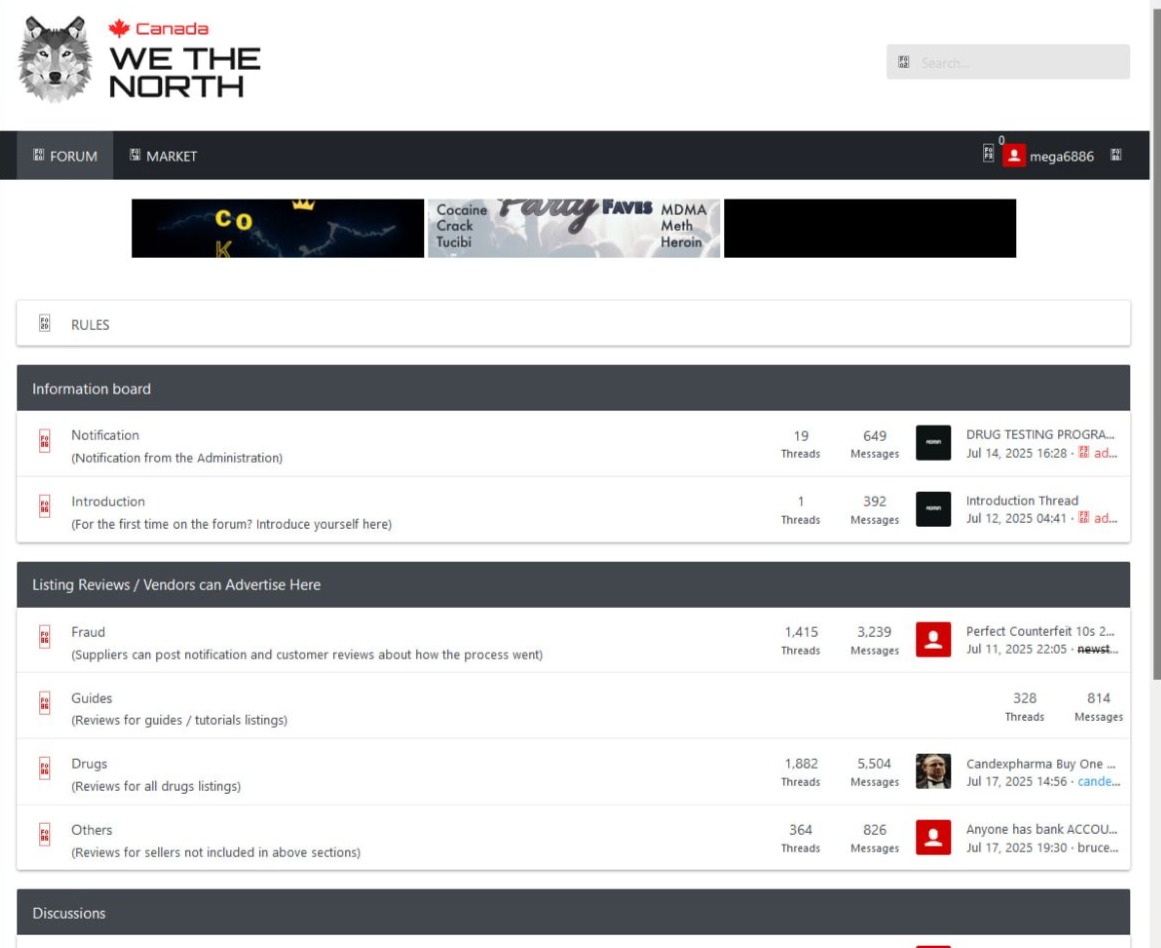
Wethenorth Darknet is documented in publicly available intelligence research as a Canadian-community-focused hidden-service marketplace with notable geographic and regulatory specificity. Unlike many platforms that operate jurisdiction-agnostically, archived platform documentation for Wethenorth Darknet indicated vendor and product policies calibrated to the Canadian legal context — a specificity that researchers interpreted as both a marketing strategy and a potential operational-security posture.
The platform's single documented v3 onion entry point, available through open-source research archives, operated throughout the observed period as the canonical Wethenorth Onion address. Operator communications archived from darknet research forums confirmed that the platform did not maintain publicly announced mirror addresses and relied on community-verified PGP-signed announcements for any address changes.
Community Structure and Wethenorth Access Policy
Research documentation on the Wethenorth Access model indicates that the platform maintained a reputation-weighted vendor trust system that explicitly differentiated between Canadian domestic vendors and international operators. Domestic vendors with verified shipping addresses within Canadian provinces were granted elevated visibility in listing rankings, a feature interpreted by researchers as reinforcing the platform's community identity.
Archived vendor policies for Wethenorth Mirror distribution indicate that the platform did not permit re-shipping from international sources — a departure from platforms that allow global supply chains routed through domestic addresses. This constraint was documented as deliberate: the platform's operator communications cited reduced customs-interception risk as the rationale for domestic-only supply chains, a position consistent with harm-reduction literature on package interception.
The platform's escrow architecture, as documented in archived technical discussions, used a two-of-three Monero multi-signature arrangement with the third key held by an independent community arbitrator rather than a platform-controlled entity. Researchers noted this as an unusual trust-distribution model — the arbitrator key was held by a pseudonymous community figure with an independently verifiable PGP fingerprint, rather than by anonymous platform infrastructure.
Academic research examining Wethenorth Darknet in the context of Canadian drug-policy reform noted that the platform's harm-reduction integration was extensive. Listings displayed standardised substance-risk panels, dosing guidance derived from publicly available pharmacological sources, and direct links to Canadian harm-reduction organisations including the Drug Users Advocacy League and Canadian Drug Policy Coalition. Whether these integrations reflect genuine safety commitment or a positioning strategy, they represent a measurable level of harm-reduction infrastructure documented in research sources.
Dispute resolution documentation archived from operator posts indicates a 48-hour automated cooling-off window before human arbitration. The platform's arbitration record, cited in investigative journalism covering Canadian darknet markets, showed a resolution rate above 90% — a figure researchers attributed to the community-trust model and the lower absolute transaction volumes typical of a geographically focused platform.
The operational security guide available at the OPSEC section of this archive covers the Tor-hardening practices recommended for accessing platforms like Wethenorth. The harm reduction resources section expands on the drug-safety materials that the platform itself referenced in its listing infrastructure.
How Does Wethenorth Onion Manage Trust?
The trust architecture documented for Wethenorth Onion differs materially from platforms that centralise arbitration within the operator's own infrastructure. By using a community arbitrator with an independently verifiable PGP key, the platform distributed trust in a way that researchers interpreted as more resilient to platform capture — if the operator infrastructure were seized, the arbitration key would remain with an independent party and could not be used to drain multi-signature escrow funds.
Vendor feedback documentation archived from the platform used a structured review format requiring buyers to separately rate product quality, communication, stealth, and delivery speed. This four-axis rating system, compared to simple five-star composites on competing platforms, generated richer reputation data that third-party researchers could use to construct more nuanced vendor quality models.