
Torzon Onion

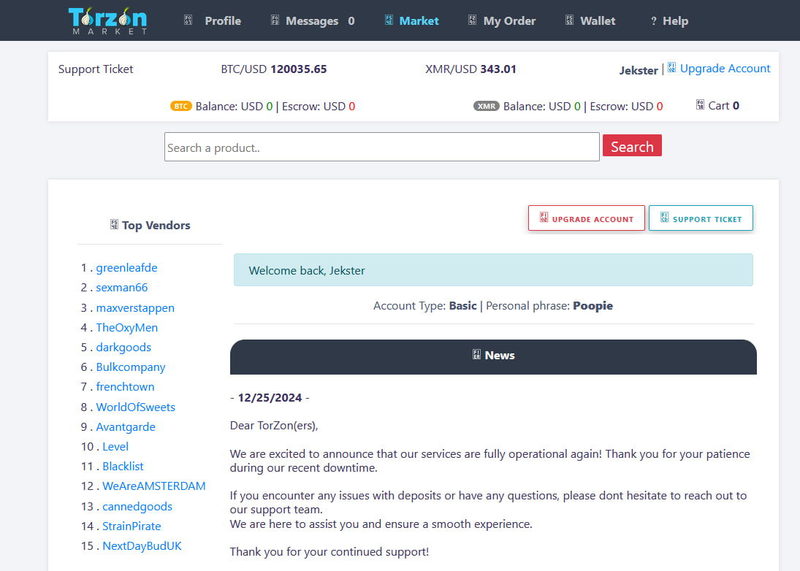
Torzon Onion is documented in open-source intelligence research as an established Tor-based hidden-service marketplace notable for its structured vendor vetting system, Monero-preferred payment rail, and a publicly maintained PGP canary. Academic and investigative sources have catalogued the platform's technical characteristics, market structure, and security practices. This article summarises that publicly available research for scholarly and informational reference.
Research monitoring of Torzon Onion infrastructure noted a multi-address deployment strategy consistent with modern platform hardening: three simultaneously active v3 onion endpoints, each resolving independently, providing resilience against the targeted DDoS campaigns that have historically disrupted single-address markets. Communications archived from platform operators indicated active maintenance of the entry-point roster, with periodic rotation designed to invalidate cached addresses used in phishing clones.
Torzon Tor Infrastructure: What the Research Shows
Independent security researchers monitoring Torzon Tor architecture documented several technically notable design decisions. The platform's escrow implementation was described in operator communications as a non-custodial Monero multi-signature arrangement, with the platform holding a collaborative key rather than an independent signing authority. This design is consistent with the broader industry movement away from custodial models following the exit scams that defined the 2016–2019 period.
Vendor qualification on the Torzon Market was documented as requiring a passing score on a technical OPSEC assessment in addition to a refundable XMR bond. The assessment — described in archived platform documentation — tests knowledge of PGP key management, Tor-safe communication, and correct use of the platform's encrypted messaging system. Researchers interpreted this gatekeeping as an attempt to elevate baseline operational security across the vendor population.
The three v3 onion addresses documented in public research archives for the Torzon Darknet platform are listed below as bibliographic identifiers. They are recorded here for academic cross-referencing only:
The multi-address strategy observed for Torzon Darknet aligns with the post-2020 industry standard for resilient hidden-service deployment. By publishing three independent entry points, the platform significantly raises the effort required for any adversary attempting to prevent access through DDoS. Each address resolves to the same backend service, verified through consistent platform-signed PGP certificates that users can independently validate.
Torzon Market Listings and Platform Structure
Archived monitoring data from open-source darknet-intelligence firms indicates that the Torzon Onion marketplace maintained a product catalogue spanning several thousand active listings during observed periods. The predominant category breakdown, consistent across multiple monitoring snapshots, placed pharmaceutical substances as the largest single category by listing count, followed by digital goods and fraud-related documentation. This distribution mirrors the general composition of major darknet markets documented in academic literature.
The vendor feedback system archived from the platform followed a standard five-star composite model aggregating ratings for stealth, product quality, communication quality, and delivery speed. Researchers noted that the feedback schema was publicly exportable as JSON — an unusual transparency feature that allowed third-party researchers to independently construct vendor-reputation graphs without relying on platform-controlled displays.
Dispute statistics archived in platform documentation indicated a resolution rate above 85% through automated or direct buyer-vendor negotiation, with the remainder escalated to third-party arbitration. The platform's published arbitration policy archived in forum discussions allocated a maximum of 72 hours for the arbitrator to issue a binding decision, with the signed decision logged to the blockchain as proof of outcome.
For readers interested in the cryptocurrency layer underpinning transactions on platforms like Torzon Onion, the anonymous payment guide provides a comprehensive overview of Monero, ZCash, and privacy-enhanced Bitcoin techniques. Readers seeking harm-reduction information should consult the harm reduction portal, which covers overdose response, drug-checking resources, and safety practices for all major substance categories.