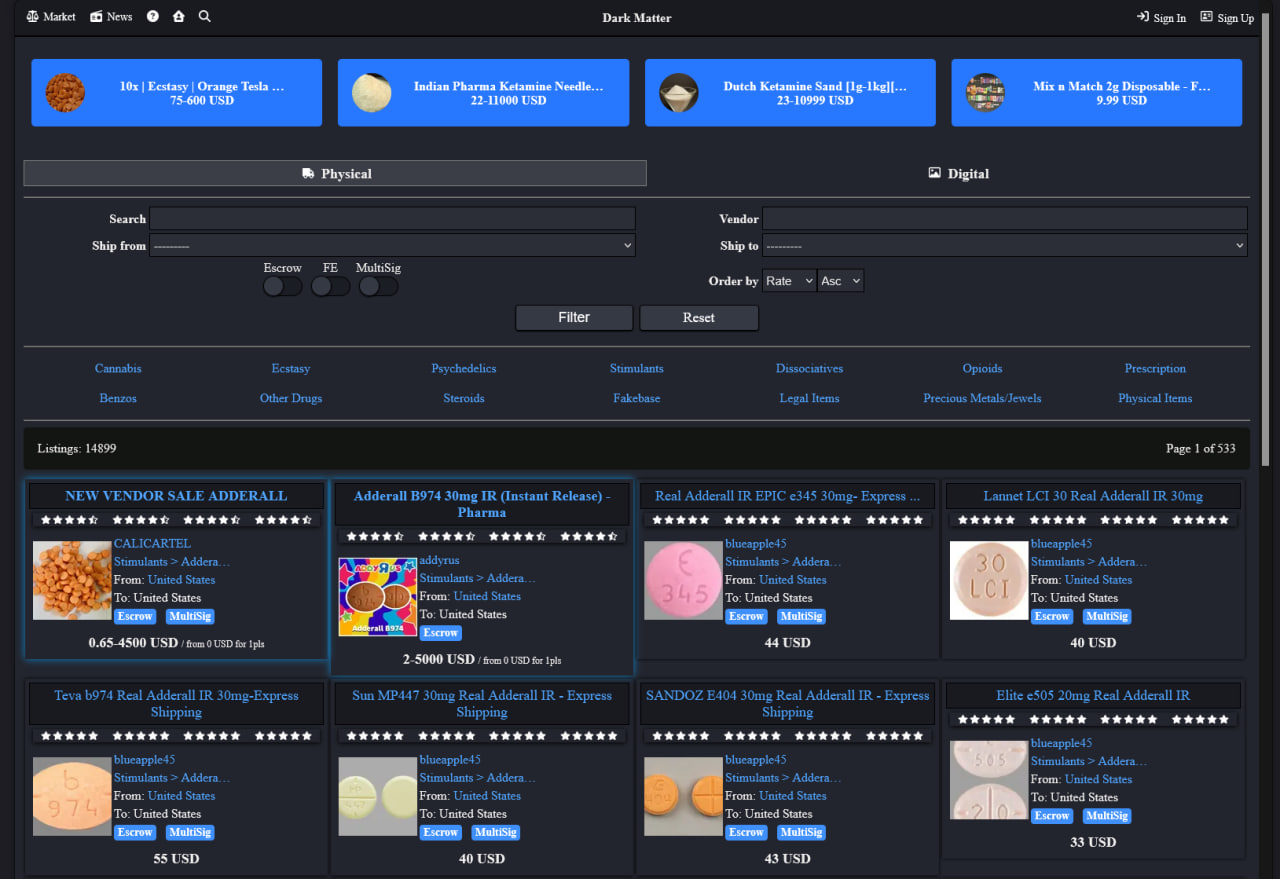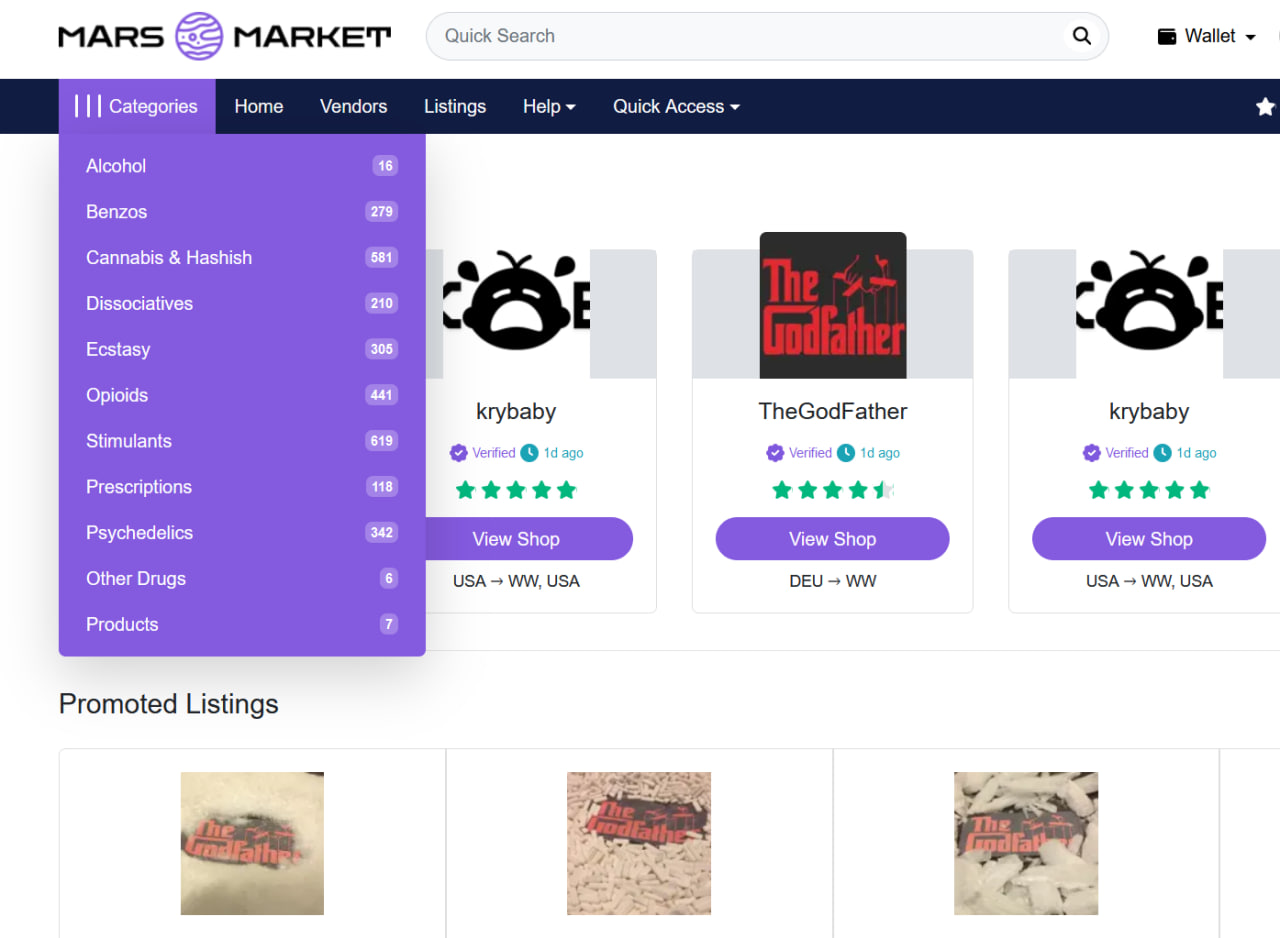
Darknet Market
A darknet market is a Tor-accessible commerce platform operating as a v3 onion hidden service, designed to facilitate pseudonymous transactions outside conventional web infrastructure. This encyclopedia catalogues architecture, platform mechanics, and safety guidance drawn entirely from open-source intelligence.
Researchers and journalists have documented hundreds of such platforms since the first public examples appeared around 2011. The architecture has evolved considerably — from centrally-held Bitcoin wallets to multi-signature Monero escrow, from simple PGP-encrypted messages to full end-to-end encrypted communication channels. This article surveys that evolution, explains the key concepts, and links to dedicated pages covering each active platform in depth.
All information on this site derives from publicly available academic publications, investigative journalism, law-enforcement court filings, and platform announcements. No content promotes, facilitates, or encourages illegal activity. Readers seeking guidance on harm reduction should consult the harm reduction portal; readers interested in anonymous payment should visit the cryptocurrency privacy guide.
How Onion Marketplace Architecture Evolved
The first generation of platforms operated on a custodial model: buyers deposited funds to a central hot wallet controlled by the operator, who released payment to vendors after successful delivery confirmation. This design created catastrophic single points of failure. Numerous platforms disappeared — sometimes through law-enforcement action, sometimes through operator-initiated theft — leaving buyers and vendors with no recourse. The phenomenon became known as an "exit scam."
Second-generation platforms introduced two improvements: multi-signature Bitcoin escrow and PGP-authenticated communication. Multi-signature escrow requires agreement from at least two of three keyholders — buyer, vendor, and market arbitrator — before funds move. No single party can steal locked funds unilaterally. Operational security practices like PGP key verification and vendor feedback systems added a reputation layer that persists to the present.
Modern platforms have largely replaced Bitcoin with Monero as the primary settlement currency. Monero's ring-signature and stealth-address design makes transaction graph analysis substantially more difficult than Bitcoin's transparent ledger. For deeper analysis of anonymous payment methods, including Monero, ZCash, and privacy-hardened Bitcoin practices, see the cryptocurrency section.
A fourth structural innovation is distributed denial-of-service resistance through onion-link rotation. Rather than a single v3 address, platforms now publish multiple mirror addresses, refreshed periodically. This architecture means that taking down one entry point does not disable the platform — a lesson learned from the repeated DDoS campaigns that crippled first-generation markets for weeks at a time.
Academic study of darknet market economics has accelerated since 2013. Researchers at institutions including Carnegie Mellon, King's College London, and the RAND Corporation have published analyses of vendor behaviour, price dynamics, and the effect of law-enforcement actions on market concentration. Their work confirms that market shutdowns frequently redistribute activity to surviving competitors rather than eliminating it.
What Makes a Secure Market Technically Distinct?
The distinguishing technical feature of a secure market is the absence of custodial fund management. In a non-custodial or multi-sig model, the platform's servers never hold funds outright — they hold a collaborative signing key that can only be exercised with at least one user-controlled key. This design means a server seizure does not automatically transfer user funds to law enforcement.
A second technical distinction is the canary system. A warrant canary is a regularly updated statement that no secret government orders have been received. If the canary disappears or is not updated, sophisticated users interpret the omission as a probable legal signal. Several platforms have deployed automated canaries signed with a PGP key whose public component is published independently, making forgery detectable.
Third-generation platforms publish DREAD scores — aggregated user reputation metrics — directly in vendor profiles. This allows buyers to make informed decisions based on historical transaction feedback rather than relying purely on escrow as a backstop. Platforms that combine multi-sig escrow, canary systems, and transparent reputation metrics represent the current state of the art in darkweb trading infrastructure.
Tor v3 onion addresses provide an additional security property absent from traditional web infrastructure: the address itself encodes a cryptographic commitment to the service's public key. A client connecting to a v3 address verifies the server's identity without any certificate authority. This eliminates a major attack vector — SSL stripping and certificate forgery — that plagues the conventional web.
Frequently Asked Questions About Darknet Markets
Active Onion Marketplace Platforms: Research Overview
The following platforms are documented in open-source intelligence research, academic publications, and investigative journalism. Statistics represent figures reported in publicly available monitoring data and are presented for research purposes only. Each entry links to a dedicated Wikipedia-style article with full technical and historical documentation.