
Mars Market Darknet

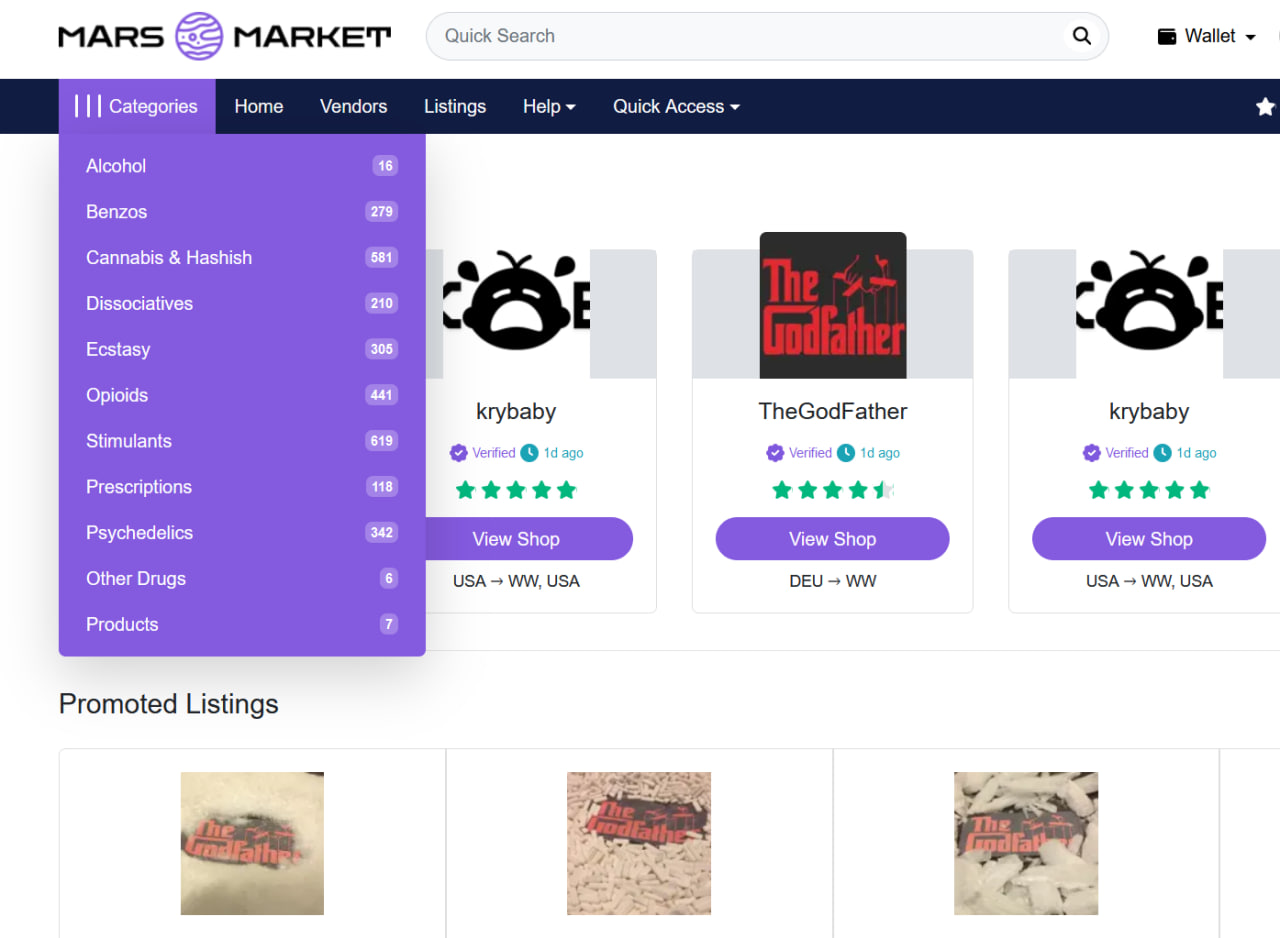
Mars Market Darknet is documented in open-source intelligence research as an emerging Tor hidden-service marketplace that distinguished itself through a gamified reputation architecture, a vendor-tier progression system, and three simultaneously maintained v3 onion entry points. Academic monitoring of Mars Market Darknet during its documented active period noted a growth trajectory and feature-development pace that positioned it among the more closely watched newer entrants in the ecosystem.
Three entry-point addresses documented in public research archives for the platform are recorded here as bibliographic identifiers, consistent with open-source research practice. The MarsMarket Tor infrastructure operated these addresses simultaneously throughout the documented observation period.
MarsMarket Tor Architecture and Vendor Tier System
The MarsMarket Tor platform's vendor tier system, documented in archived onboarding materials, classified vendors across four ascending trust levels — identified in research as: Cadet, Cosmonaut, Astronaut, and Commander. Each tier unlocked additional platform privileges: higher listing caps, access to premium search placement, reduced arbitration fees, and ultimately access to the finalise-early whitelist at the Commander tier. Researchers identified this gamified progression as a mechanism for building long-term vendor investment in the platform's ecosystem.
The MarsMarket Mirror strategy documented in operator communications maintained two publicly announced addresses with a third reserved for DDoS failover. The failover address was published only in the platform's PGP-signed emergency announcement channel, requiring users to have archived the platform's public key to receive and verify emergency routing. Researchers noted this two-tier mirror architecture as an unusual combination of public redundancy and emergency capability.
Payment infrastructure documented for Mars Market Darknet used Monero as the primary and exclusive settlement currency, with no Bitcoin or altcoin alternatives offered. The rationale documented in operator communications cited the difficulty of maintaining auditable multi-signature escrow across multiple cryptocurrency protocols, with XMR's subaddress system providing the most efficient single-currency escrow implementation.
The MarsMarket Onion dispute system documented in platform archives used a time-weighted escalation model. Disputes unresolved within 24 hours were automatically escalated to community arbitration; disputes unresolved within 48 hours triggered automatic fund-split at the last recorded agreed-partial-delivery fraction, a mechanism designed to incentivise rapid resolution by both parties. Researchers noted this automatic split-on-timeout as an innovative dispute-resolution mechanism not observed on most competing platforms.
Harm-reduction integration documented for Mars Market Darknet included a standardised listing-level risk panel displaying known substance interaction risks derived from the WHO and EMCDDA public databases. The platform's documentation described this as automated — risk panels were generated programmatically from substance category metadata rather than manually curated, a design that ensured consistent coverage at the cost of some pharmacological precision.
Vendor feedback data archived from the observation period indicated a median vendor completion rate above 97% — a figure researchers attributed to the tier-progression system creating strong incentives for positive outcomes across all transactions, not just high-value ones. For comprehensive cryptocurrency privacy guidance relevant to Mars Market, see the anonymous payment section. Drug safety resources are consolidated in the harm reduction guide.
What Does Research Show About Mars Market Darknet Volume?
Open-source monitoring data on Mars Market Darknet during documented observation periods cited listing counts growing from an initial few thousand to a reported peak in the low tens of thousands over the platform's documented first year of operation. This growth rate, compared across new-platform observations documented in academic literature, placed it in the upper quartile for first-year listing growth. Researchers attributed this trajectory to the tier-progression vendor-retention system, which reduced churn among established vendors.
The warrant canary documentation for MarsMarket Tor was published at weekly intervals, consistent with security-conscious operator practices. The canary text was authored in a standardised legal-instrument enumeration format and signed with the platform's primary PGP key, the fingerprint of which was archived across multiple independent key-distribution channels.