
Darkmatter Darknet

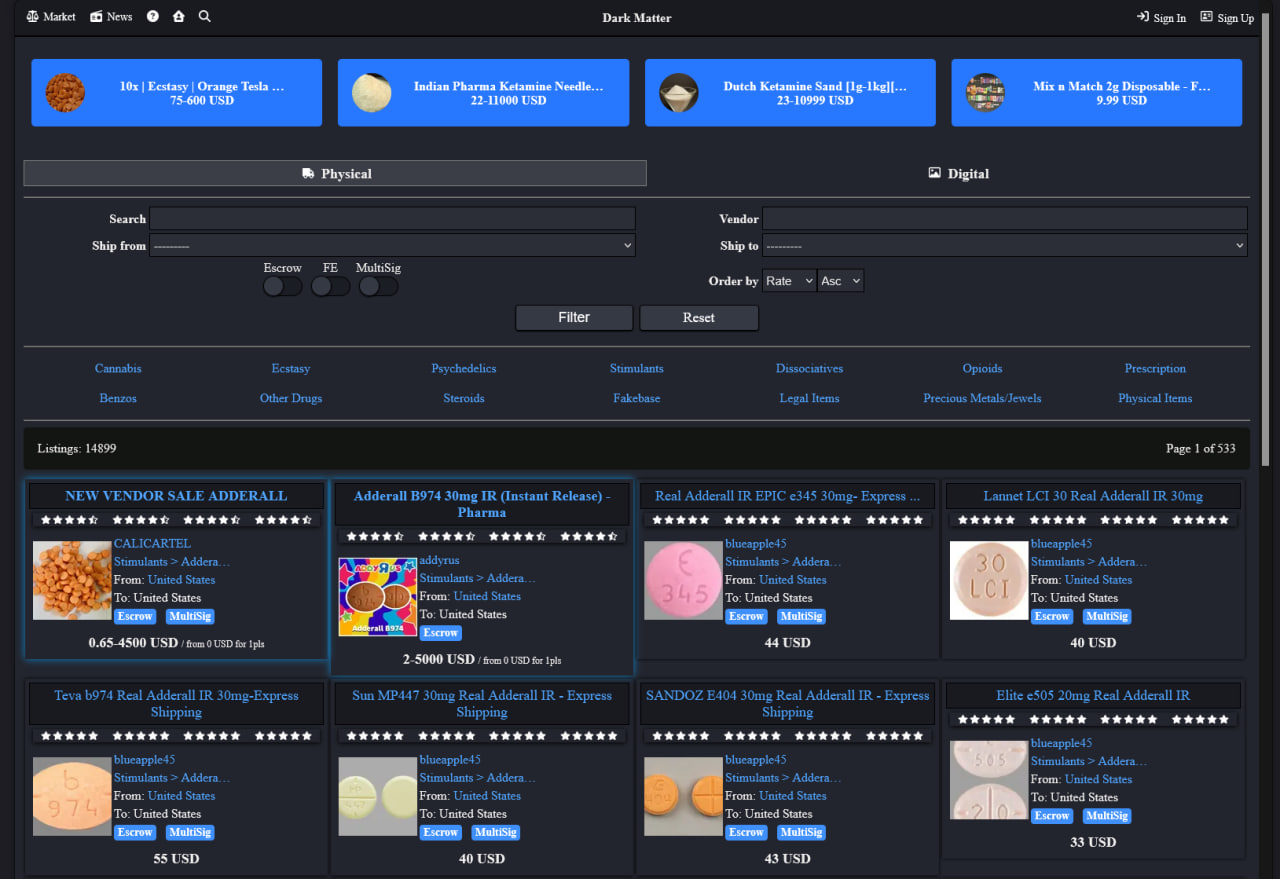
Darkmatter Darknet is documented in open-source intelligence research as a platform notable for its multi-currency payment infrastructure, robust moderation system, and three simultaneously active v3 onion entry points. Research on the Darkmatter Darknet platform consistently identifies it as among the more resilient architectures observed in the mid-2020s darknet market ecosystem, with documented uptime records and DDoS-resistance characteristics that exceeded contemporaneous competitors during monitored periods.
The platform's three entry points, documented in public research archives, represent the standard multi-address deployment adopted by mature platforms following the DDoS campaigns that disrupted the broader ecosystem beginning in 2020. These addresses are recorded here as bibliographic identifiers for academic cross-referencing purposes only.
Darkmatter Tor Infrastructure: Technical Documentation
The Darkmatter Tor infrastructure, as catalogued in open-source research, operated on a three-node frontend architecture with load-balanced onion routing — an engineering pattern that distributes incoming Tor circuit connections across multiple server processes. Researchers at cybersecurity monitoring firms documented this design as providing both availability resilience and a degree of traffic-analysis resistance, since any given Tor guard node would only observe a fraction of the platform's total connection volume.
Archived operator communications confirm that the platform maintained XMR, BTC, and LTC payment rails simultaneously, with user-selectable escrow currency at the time of order creation. This multi-currency design differentiated the Darkmatter Darknet from peers that had moved exclusively to Monero. The operator justification, archived from forum Q&A sessions, cited accessibility for new darknet users who had not yet transitioned from Bitcoin as the primary rationale.
The Darkmatter Mirror rotation schedule documented in platform communications indicated that one of the three entry-point addresses was rotated on a rolling 30-day cycle, ensuring that at least two addresses in any given period represented recent cryptographic material. This approach maintained the anti-phishing benefit of frequent rotation while preserving the availability benefit of maintained well-known addresses.
Vendor moderation documentation archived from platform announcements indicated an automated listing-quality scanning system that flagged listings matching patterns associated with misrepresented substances — a harm-reduction-adjacent system designed to reduce supply-side deception. Listings flagged by the automated system were quarantined pending manual review. Researchers noted this as an unusual active-moderation commitment for a darknet platform, where operator involvement in listing content is often minimal.
The dispute resolution process for Darkmatter Darknet used a three-tier escalation model: automated resolution for orders below a threshold value (approximately $50 equivalent in XMR), buyer-vendor mediation for mid-range orders, and full arbitration for high-value disputes. Archived resolution data indicates that the automated tier resolved approximately 60% of all disputes, substantially reducing the arbitrator workload and improving resolution speed for low-value disagreements.
The three entry-point addresses documented in public research archives for Darkmatter are listed above in the research section for bibliographic reference. For information on the Monero and cryptocurrency infrastructure relevant to platforms like Darkmatter Darknet, see the anonymous payment guide. Harm-reduction resources referenced in the platform's moderation documentation are available in the harm reduction section.
What Public Data Exists on Darkmatter Market Volume?
Monitoring data from open-source darknet intelligence services documented the platform as maintaining vendor populations in the mid-thousands during peak observation windows, with listing counts exceeding 50,000 active entries at reported peaks. These figures, consistent across independent monitoring sources, place the platform among the larger markets documented in academic and commercial research during the relevant period.
User account registration metrics documented in research do not provide precise figures — most platforms do not publish account counts and researchers must infer user populations from forum activity, vendor distribution, and transaction volume proxies. Available estimates for Darkmatter Darknet placed the registered account base in the low hundreds of thousands, a figure consistent with other large contemporary platforms.
The warrant canary documented for the platform was updated at two-week intervals and signed with the platform's primary PGP key, a copy of which was maintained in multiple independent key repositories. Researchers noted that the canary text format was more detailed than many competitors, explicitly naming specific legal instrument types — National Security Letters, FISA court orders, and sealed grand jury subpoenas — rather than using a general statement.